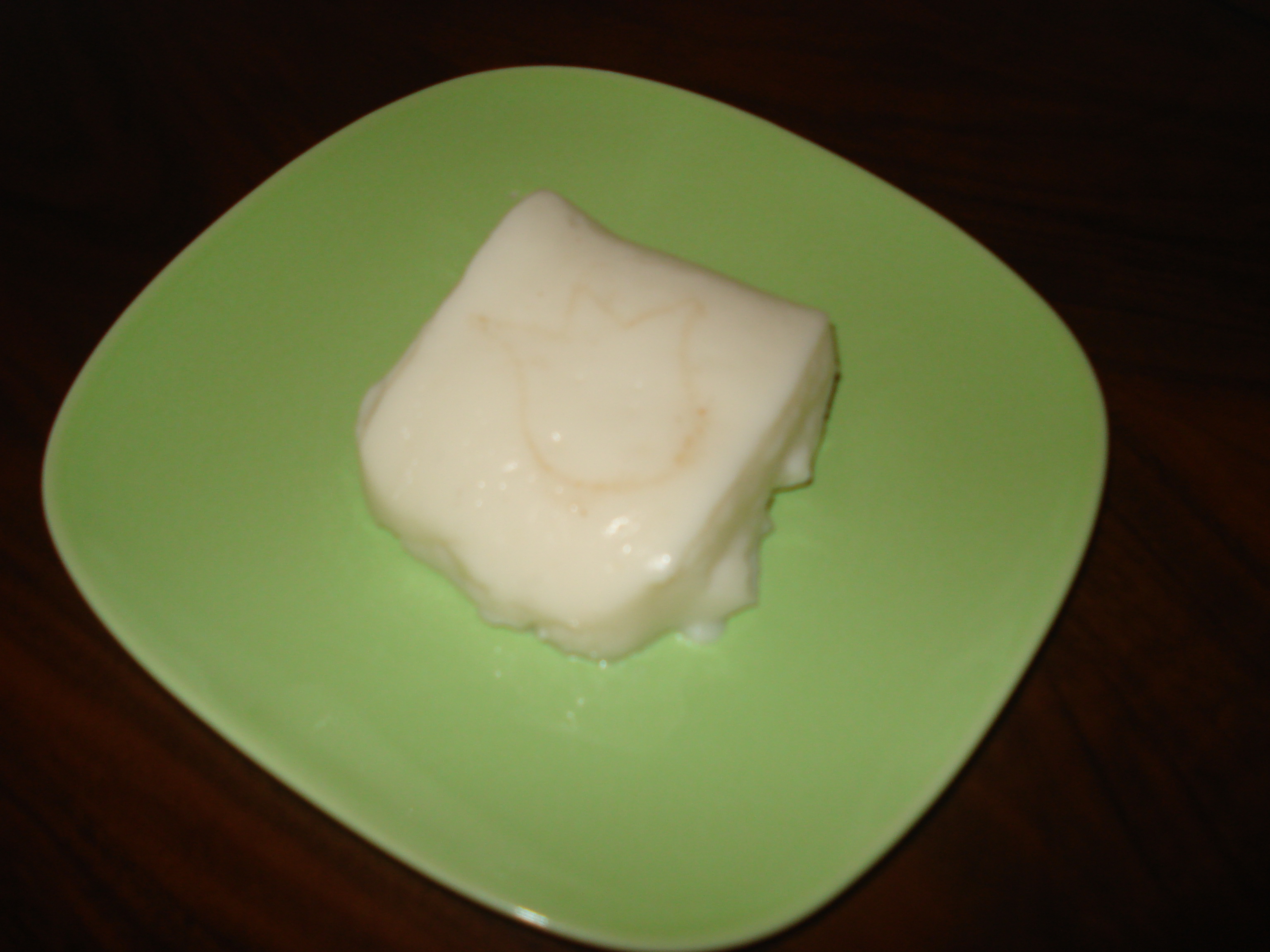
Here's a trick a lot of Turks play on visitors:
What's in that pudding on the right?
Answer: Milk, cinnamon, sugar, rice. Maybe some vanilla.
And?
*stymied*
Bet you'd NEVER guess chicken.
Chicken? Huh.
Yup. Chicken breast, pounded into filaments, and added to the pudding, appropriately named tavuk göğsü (chicken breast). The result is something like the blancmange you might know from medieval historicals.
While chicken is an odd addition to pudding, I actually like this dessert, as long as they don't add any other oddities. Cooks in the east tend to flavor their puddings a bit differently. Makes sense, since vanilla and chocolate are new world flavors.
So. Old world flavors:
Mastica - sap from the pistacia lentiscus tree - bleh. I pretty much hate this one. Reminds me of eating the resin for my violin's bowstrings. Or maybe Pine Sol. Some people love it, and my husband is one of them.
Rose water- basically, perfumey water- bleh. Take grandma's eau de toilet, remove the alcohol. Now add it to your pudding. Even my husband stays away from this one. Rose petal jam? That I'll eat.
Orange blossom water - the same thing as rose water, but orange blossom flavored. This is a little bit better than the other two flavors. With enough sugar, I can MAYBE pretend it's orange blossom honey. Sometimes cooks will toss a couple leaves of an orange or lemon tree to flavor a pudding .
Then there are spices like cinnamon, allspice, cloves, cardamon (one of my faves). Even saffron (flower stamens- is it an herb or a spice?) can be used in pudding and turn out tasty. Coffee is another good one, but usually found in more western style desserts.
Chocolate? Vanilla? Many Turks make chocolate rice pudding, add vanilla to their tavuk göğsü, etc. I can even handle a tiny touch of the mastic, if I add some vanilla too.
Do not be satisfied with the stories that came before you. Unfold your own myth. -Rumi
Showing posts with label Turkish cuisine. Show all posts
Monday, January 21, 2013
When pudding isn't what it seems...
Labels:
mastic,
orange blossom water,
rose water,
tavuk göğsü,
Turkish cuisine
Monday, September 17, 2012
Chobani
![]() |
| Chobani |
Answer: Because it's really Turkish.
Lots of Turkish stuff in this country is labelled as Greek. In this case, people were already familiar with Greek yogurt, even though it's the same stuff the Turks make.
Tomato, tomahhhto. Whatever!
So what makes this Turkish/Greek stuff different from regular yogurt?
It's strained.
When I lived in Turkey, I was like: What is it with this thick stuff?
I was yearning for Yoplait, you see, but all while the Turkish stuff was better for me.
Less fat, more protein. No artificial anything.
Me being a word-a-holic, the purpose here is to let you in on the roots of the name Chobani.
Choban is the Turkish word for a shepherd. When you add an i, the word is modified to mean "shepherd's style". Technically, I think the i is an Arabic addition. You know the Ottomans were all over the Middle East, so they must have picked up some word habits while they were there.
The Chobani story:
While tidying up his desk back in 2005, our Founder and CEO, Hamdi Ulukaya, stumbled upon a classified ad for a yogurt plant recently closed down by Kraft. After initially throwing the ad away, Hamdi listened to his gut, fished it out of the trash and went to see it that day. He decided to buy the plant on the spot, and went to work on perfecting the recipe for Chobani based on his belief that everyone, regardless of income or location, deserved access to delicious, high-quality yogurt. The first cup of CHO finally hit shelves 18 months later and has since grown to become America’s #1 yogurt.
To me, Hamdi sounds like an Egyptian first name. Ulukaya is definitely Turkish . Maybe that's how the name Chobani happened. Hybrid people make up hybrid words - I know I do it all the time.
Per the (very cute) video below, Hamdi Ulukaya grew up in eastern Turkey.
So I'm off to have some black cherry Chobani.
What's your favorite flavor?
Labels:
Chobani,
Hamdi Ulukaya,
Turkish cuisine
Wednesday, May 2, 2012
Yedidunya ~ Loquat
![]() |
| Loquat |
The name yedidunya means "seven worlds" and I've always believed it alluded to the idea of the seven heavens, ie: amazing fruit such as this can only come from the seventh heaven. I might be wrong, but I think I must be right. My husband's cousin agrees with me.
So:
1) Why am I writing about this today? And
2) Where have I been for the past month? And
3) Where can we get some yedidunya???
*Sighs* I spent most of last month revising, but there was a short stint where I disappeared for a weekend Master Class. Then I unplugged and went to the beach. Something I highly recommend, btw, even when your inner editor balks at the idea because you have so much work (and you have pages and pages of notes on things to fix from class). In fact, especially when your inner editor balks. Put it in it's place because there's nothing more urgent than a creative recharge.
The answer to question number three is a bit trickier, as the only place I know to find yedidunya is on Hilton Head Island. This part requires the slowing down and unplugging to occur.
Grab a bicycle and hit the trails near Harbor Town in Sea Pines, and there's a row of trees in fruit right along the edge of the marina. Everyone else just rides past because they don't know what the tree is, and they're oohing and ahhing at the giant live oak front and center. And you need to be riding at a snail's pace while you wait for the rest of your party to catch up, or you won't see the fruit either.
Then go home and look up "yedidunya" for the first time ever and learn that it's actually a loquat, Eriobotrya japonica, aka Japanese Medlar, Japanese plum, or Chinese plum. Learn that the flavor is accurately described as a mix of peach, citrus and mango, and that the fruit makes great jam. Also realize at this point that the slightly poisonous seeds you've saved are not useful without a greenhouse because you can't fit a ten foot tree in your house.
I'm guessing people in points south have loquats growing someplace near them. Probably California is a good place to look for some too. Otherwise, I've never seen loquats in a store. Have you?
Labels:
Flora and Fauna,
Loquat,
Turkish cuisine,
Yedidunya
Wednesday, April 11, 2012
Paring It Down
![]() |
| via tasteoftanzania.com |
Last Monday I wrote about olives (because I just couldn't think of anything exciting) and you loved me anyway. Thanks!
Anyhow, Jacqueline Howett shared her experience with olives: On our vactions from England to Greece to visit my Yaya who lived in a olive grove, we got stuck with the chore of slitting each olive with a knife for selling to market.
That comment got me nostalgic for the days I spent with the other women of my husband's Turkish family, coring, chopping, and preparing all sorts of veggies for the dishes we created. We sat around the table in the kitchen or out on the balcony, drank lots of tea, and read many fortunes. Don't get me wrong, I love climbing ruins and all that...but this one rite of passage into the lives of my in-laws was priceless.
Not only did I learn to make some yummy things, I also got an earful of stories. (And sagas, but we'll pass on those for today.) Little tips, like rubbing the tomato with the flat side of the knife before peeling to release the skin. (I blanche mine now. Tomatoes here aren't the same.) Or, my favorite: Put your thumb at the base of the blade, so the knife doesn't come out the other side of the (baseball-sized) eggplant. And the one I won't ever forget - Just because the chile seeds aren't burning you right now, doesn't mean they won't. (Spent several hours dipping my digits in ice water for not listening to that!)
Some days, ana anne (grandmother) would open out the dough for manti (imagine tortellini). Believe me, stuffing one million teeny strips of dough with meat is more fun when you have help.Then there were the dilemmas: aunt x says to use paprika, mother-in-law says cumin is better. I don't like cumin. Use paprika. Pay dearly. Yes, I laugh about it today, but it wasn't so funny then.
Just like with fishing, carefully paring the tops off okra the size of my thumbnail, without breaking into the seeds, taught me something. If you want to absorb another culture, it's important to slow down and smell the spices.
Labels:
Turkish cuisine,
Turkish culture
Monday, March 19, 2012
Ramped Up
![]() |
| purslane |
Dandelion salad, anyone?
You might laugh, but in the villages of the world, nothing is wasted.
I remember one of my husband's aunt's reminiscing on purslane. She was a city dweller through and through then, but she was old enough to remember when country life was a way of life for her parents. She collected a whole basket full from the weed-choked vegetable garden behind the summer house. Then she picked off the leaves and cooked them up with some onions and olive oil. Salt to taste. I thought it was odd, so I never tried it.
Then my father-in-law came home with a generous bunch of peppery arugula. As it came from an actual market stall, I was less wary, but my initial response was: "Is this cow food?" Everybody laughed at me. (Yeah - having an American bride in the house was a source of great entertainment.) I do eat baby arugula today, but the big leaves still don't make it to my plate.
Even more interesting, a stray relative who stopped in for a visit upped the game to stinging nettle. She cooked that down like spinach and ate it. Supposedly, the stuff has lots of good vitamans. Not for me. I stopped at the 'stinging' part of stinging nettle.
I've expanded my taste over the years to include all sorts of plants in my herb garden. Sorrel and arugula are a standard now, and even my kids like to roast wild onions on the fire when we run out of marshmallows. It's these onions that I'm working into an ms at the moment. I think onions are the easiest to identify, and the least likely candidate for reader objection.
Here in the south, wild spring leeks called ramps are a delicacy. I even read an article in Town and Country about them recently. If that's any indication of the gourmet appeal of wild foods, then pretty soon the village folk won't have any left for their tables.
Labels:
arugula,
ramps,
Turkish cuisine,
wild foods
Monday, December 26, 2011
Chocolate Covered Chestnuts
![]() |
| Lezzetin Izinde |
Perhaps you've tried marron glacé? I adore them, whenever I can find some. It's probably a good thing they're hard to come by, though. The calorie count for chestnuts soaked in sugar syrup is insane. Some shops make them in Turkey, but as you can tell from the name, it's the French who really get credit for the idea - sorry Italy.
As far as Istanbul is concerned, there are other interesting ways to prepare a chestnut or kestane. Example: Chocolate coated chestnuts. From what I understand, the chestnuts are:
1) roasted to remove the shells
2) boiled in milk, vanilla and sugar
3) coated in (dark?) chocolate, and
4) dusted with pistachios
According to Hurriyet newspaper's 100 Tastes of Istanbul - Istanbul'un 100 Lezzeti, #49 is the chocolate covered chestnut from Bahar Pastanesi in Teşvikiye.
Best4 Pastry Shops in Istanbul
Bursa retaining sweet chestnut taste, tradition
Monday, November 7, 2011
Yogurt Soup - Yayla Çorbası
![]() |
| image via tulumba.com |
An easy one that I like to make is Yayla Çorbası, which means peasant soup, or technically mountain village soup - aka yogurt soup.
For this you'll need:
One 32 oz package (4 c) of PLAIN yogurt.
Not Greek yogurt. Not vanilla yogurt. Plain. Preferably low fat, as opposed to nonfat. I use Dannon. A full cream organic like Stoneyfield Farms would be a waste of calories, IMHO. I'm picky about my yogurt.
1/4 cup flour
1 egg
1/4 cup of dried mint
1/2 of medium grain rice, rinsed
Two 32 oz cartons (8 c) chicken stock
To prepare:
Empty the yogurt into at least a 4 quart pot. Whisk in flour, egg, and dried mint. Add stock and rice. Stir frequently over medium-high heat, until the mixture almost comes to a boil. Bubbles look like they want to come through at the edges. Don't let it boil! The soup separates if it boils. Reduce heat to a simmer for about 15 more minutes, so the rice can cook through.
Serve with red pepper flakes.
I've eaten this cold. I've eaten it without red pepper flakes. I've eaten it with a splash of tabasco. Sometimes the yogurt isn't sour enough and I'll squeeze in a little lemon. Actually, this is a perfect dish to use up that container of yogurt you forgot about in the back of your fridge.
Or, if you're rushed and NaNoWriMoing like me, you can buy the mix.
Labels:
Turkish cuisine,
Turkish recipes,
Yayla Çorbası,
Yogurt Soup
Monday, September 12, 2011
Mandabatmaz
![]() |
| image via evimistanbul.com |
Mandabatmaz? WTF is a manda and why doesn't it sink? Clearly there's an idiom in this word.
His response: Shrug. IDK.
Google translate: Buoyant Buffalo.
Picture: Buffalo in a coffee cup? Still not making any sense. Feel free to chime in now, if you have any ideas...
![]() |
| aysun-tinypiccomrakcw0y.blogspot.com |
Custom roasted coffee beans, a copper cezve, combined with a careful twist of the wrist and you have what is known to be the best Turkish coffee in the city. The shop is featured in all sorts of guides and it's a must-do. Coffee readings not included.
The first scene of Burnt Amber is in a place kind of like Mandabatmaz, but I took plenty of creative liberties with the decor. My coffee shop was purely my imagination. It's nice to see the vision isn't so far from reality.
Related Articles:
$100 Weekend in Istanbul Frugal Traveler, The New York Times
Mandabatmaz: Grounds for Celebration IstanbulEats.com
Labels:
Beyoglu,
Coffee,
Istanbul,
Mandabatmaz,
Turkey,
turkish coffee,
Turkish cuisine
Wednesday, August 3, 2011
Pepper Paste - The Secret Ingredient
![]() |
| via Turkey-in-photos.com |
In the villages around Mersin, women dry their peppers on a string in the sun. Then they add salt and put them though a mill, whole. Sometimes they're dried on a sheet in the fields. I buy a commercial variety in a jar which isn't quite the same, but works better than not having any at all. I get it where I get all my other Turkish stuff, on Tulumba.com.
So I'm off to stuff some eggplants... check these sites out for more ideas.
Turkish Hot Pepper Paste - Biber Salcasi
Turkish pepper paste: Magic in a bottle
Labels:
pepper paste,
Turkish cuisine
Monday, July 4, 2011
Kendin Pişir, Kendin Ye & Alfresco Alla Turca
Happy 4th of July! Since picnics and family barbeques are in order today, here's a Turkish take on the matter.
Me: Pack up a bunch of food. Trek to a scenic place. Unpack the food. Remember that I forgot to pack such and such. Usually, it's an essential item - like napkins, forks, the bottle opener... and if I wanted to grill something on a real charcoal fire...well then, I guess I forgot the matches or the starter sticks, or something like that.
Kendin Pişir, Kendin Ye (literally: You cook it, You eat it) is the Turkish solution to my headache.
At first I thought it was odd to have a restaurant where you cook your own food, but basically the idea is this: someone else gets everything ready and I just show up. So instead of the above routine, imagine this:
Get group of friends and family together in the car. (Half the battle - maybe meet everyone there?) Drive to scenic place. Order meat from the butcher on site. Choose side items freshly made by village woman who cooks better than grandma. Start a tab for drinks. Have already perfect hot coals brought to the grill at your table. Grill like a pro. The best part? The staff cleans up after you! :)
Eating & Drinking - Kendin Pişir Kendin Ye - Cin Bal Lonely Planet
| via turkeysforlife.com Cin Bal in Kayakoy |
Me: Pack up a bunch of food. Trek to a scenic place. Unpack the food. Remember that I forgot to pack such and such. Usually, it's an essential item - like napkins, forks, the bottle opener... and if I wanted to grill something on a real charcoal fire...well then, I guess I forgot the matches or the starter sticks, or something like that.
Kendin Pişir, Kendin Ye (literally: You cook it, You eat it) is the Turkish solution to my headache.
At first I thought it was odd to have a restaurant where you cook your own food, but basically the idea is this: someone else gets everything ready and I just show up. So instead of the above routine, imagine this:
Get group of friends and family together in the car. (Half the battle - maybe meet everyone there?) Drive to scenic place. Order meat from the butcher on site. Choose side items freshly made by village woman who cooks better than grandma. Start a tab for drinks. Have already perfect hot coals brought to the grill at your table. Grill like a pro. The best part? The staff cleans up after you! :)
Eating & Drinking - Kendin Pişir Kendin Ye - Cin Bal Lonely Planet
Monday, April 18, 2011
Sesame Simit
![]() |
| via Uniglobalexotic.wordpress.com |
Ummm....Tahini?
Yeah...tahini is made from ground up sesames. It's very important to middle eastern cuisine. You can't make yummy halva (confection) or hummus (chick pea spread) without it. I dare you to eat a falafel sandwich without tahini sauce. (Lemon juice, salt, garlic, tahini = yum!) Actually, I put that sh...
Sorry, wrong commercial. :)
As I was saying, sesame is an ingredient in tons of things that I love. My two Turkish favorites are Tahin Pekmez (Turkish spread, sort of like peanut butter) and Simit (pic above). Simit and çay are standard fare for every Turk, from all walks of life.
What variety of sesame do you crave? And what does this have to do with writing?
Well, I was thinking about my first post. There are so many ways I could have gone with this blog, with my manuscript, and they all would have been fun. There was one message that I kept coming back to: Tales of Turkiye, from my American-bride perspective. And it all started from one small seed.
Related articles
- Open (Black) Sesame! (online.wsj.com)
- A Turkish Classic , Simit….
Labels:
Hummus,
Sesame,
Simit,
Tahini,
Turkish cuisine
Monday, February 21, 2011
Turkish Wine
So since I just crossed the 200 follower threshold, I thought I'd celebrate today with a little bit about Turkish wine.... I'm not a connoisseur by any stretch of the imagination, but I do enjoy the occasional glass, especially from a boutique vineyard.
(Vineyards are lovely setting for any sort of mischief...no? Just wait till you see the ones in Cappadocia! Early Chirstians were making wine in the underground cities there centuries ago.)
A little more history:
With the rise of the Islamic Ottoman Empire, winemaking in Turkey experienced a significant decline. Then in 1925, Ataturk (the first Turkish President) opened a state run vineyard and over the years, it's become a more viable business for entrepreneurs. Some successful Turkish wineries include Sarafin from the region of Thrace and Kavaklidere from Cappadocia. Stateside, Total Wine stocks Kavaklidere for between $12-14 a bottle online.
Unique red varietals include:
Öküzgözü (ox eye): This unique ageable dry red wine – Öküzgözü ages well up to 10 years – has a bright red color, reveals intense fruity flavors of raspberry and cherry, and is rich with a well-balanced body with light tannins. The alcohol ratio of wine is between 12 - 13%. Öküzgözü is best served at 16-18 degrees C (61–64 degrees F) and is a perfect match with different dishes served with a cheese sauce, casseroles, red meat, grills, cheese and poultry. (wikipedia)
Boğazkere: The characteristics of this wine is strong body, very enjoyable long finishing, dark red color with dark blue hue, very rich and strong aromas of dried red fruits, spices. Good for aging up to 10 years. Recommended with red meat kebabs, turkey, salmon and cheese. Especially eastern Anatolian cheddar or Gruyere cheese. (again, wikipedia)
Winemakers grow standards as well, blending Anatolian varieties with European varieties like Shiraz, Pinot Noir, and Cabernet. A popular white is Narince, which is Chardonnay-like, supposedly with notes of fruit and white flowers. It's often mixed with Semillon grapes.
Here's a CNN report about the Revival in Turkish Wine:
I'll toast to that! Şerefe! (Sheh-re-fe)
Related articles/Wine Reviews
Labels:
Cappadocia,
Turkish cuisine,
Turkish wine,
Wine
Monday, February 14, 2011
Something Fishy
I did much better at the seafood restaurant in Narlikuyu, a beautiful cove which managed to included in my MS. Yup! Seafood is important to Mediterranean life, but, if you ask the women there to cook some up, they point to the nearest restaurant. Fish dishes are relegated to the summer, when you can open the windows to air everything out thoroughly. If you cook it at all. (Sinks up the house and that's bad for visitors, apparently.)
BTW, Happy Valentines Day!
![]() |
| via gamze sonmez @Flickr |
The best way to learn a language is by immersion. In my case, I was stuck in a small fishing boat off the coast of Mersin with three people who laughed at my childish efforts. Well, that was only part of my training. The point is you have to be forced into it, without recourse to speak your native language. Be a fish out of water, so to speak. :)
Fishing is a big deal in Turkey, as with any coastal place. My Eniste (husband's uncle-in-law), Teyze (husband's mother's aunt) and dearest husband conspired to spend the weekend evenings of my first Turkish summer cramped into a tekne (rowboat). I couldn't understand anything on TV anyways, so... off I went.
I'm not so bad at fishing...with a rod. But when they gave me a small rectangle of wood wound in some fishing line and studded with multiple hooks at the end, things suddenly got hilarious.
![]() |
| via RedBubble.com |
Eniste baited the hooks with some shrimp and tossed my line overboard. And it came up empty. Again and again and again. Everyone else was catching fish, so I started to get desperate, tugging at the line in little jerks. When I pulled it up, there were fish hooked on alright. Some small fry Eniste called mercan (coral) aka sea bream, all about the size of a half-dollar coin. Hooked on by the gill, tail, fin, everywhere but the mouth! The little buggers kept nibbling my bait all night. (OK, so it was more than just the ONE night. I can't live this down! And here I'm telling you about it...)
I did much better at the seafood restaurant in Narlikuyu, a beautiful cove which managed to included in my MS. Yup! Seafood is important to Mediterranean life, but, if you ask the women there to cook some up, they point to the nearest restaurant. Fish dishes are relegated to the summer, when you can open the windows to air everything out thoroughly. If you cook it at all. (Sinks up the house and that's bad for visitors, apparently.)
BTW, Happy Valentines Day!
Labels:
fishing,
Language,
Turkish cuisine
Thursday, December 30, 2010
The Mystery of Kekik
When you live abroad, you need to relearn some things. The names of the herbs and spices in your kitchen is one of those things. The names can vary from regions to region, which is what I found in Turkey.
Technically, kekik translates to thyme. Practically, it can mean: thyme, winter savory, and sometimes even rosemary. It's a little bit frustrating, but worth learning the latin names of plants for this very reason. Finding someone else who knows the latin names is an entirely different story. You just have to wing it.
When I lived in Mersin, we'd regularly picnic in the foothills. Searching for the wild herb was part of the excursion. We grilled our kebabs with it there and took plenty home to dry. That was lucky for me, because if it had been in a jar labelled Kekik, I would have never found out what it really was.
I searched for the "Mersin kekik" here in the states. To the untrained eye, it does look a lot like thyme, but it isn't. Kekik tastes like mint and thyme got together, so I tried that. Combining those two herbs doesn't do the same thing. When I finally found it at the nursery, the label said winter savory, satureja montana... I grow it in my yard now for a steady supply because you can't buy it at the supermarket. It's an essential herb for grilling lamb (super yum!) and for my white bean stew.
Labels:
Mersin,
Thyme,
Turkey,
Turkish cuisine,
Winter Savory
Monday, December 27, 2010
Flavors of Turkey
![]() |
| via Amazon.com |
Are you hungry?
Sheilah Kaufman spent some time in Turkey exploring the countryside and the cuisine. Then she and Nur Ilkin whipped up The Turkish Cookbook. The title earned a spot on the Washington Post's Top Cookbooks of 2010 list.
Might be a good place to spend that gift card you got for the holidays...
Related Articles:
US gastronome's book on Turkish cuisine tops list
Labels:
Cooking,
Turkey,
Turkish cuisine
Thursday, December 9, 2010
Baklava
Here's my recipe. It's not a "Turkish" recipe. I got it from a friend who's married to a Greek guy and she got it from a neighbor up in (I don't remember where) who was from Lebanon (I think.) Who knows where it originated anyway? It's popular all over the Middle East and Mediterranean.
Start with the Syrup:
2 cups Sugar
2 cups Water
3 Tablespoons Honey
Boiled and Reduced. Add:
1 teaspoon Vanilla
Juice of`1 Lemon
Cool and Refrigerate. Always pour COLD syrup on the hot Baklava (or whatever else you're making.)
Filling:
3 1/2 cups of Walnuts
2 1/2 cups of Almonds
1/4 cup Brown Sugar
1 Tablespoon Cinnamon
1 teaspoon Nutmeg
Mix it all together in the food processor until the nuts are ground pretty well. (Not too fine or it'll be paste!)
Melted Butter (1+ Sticks)
1 Package Phyllo
Butter the pan (I use a half sheet pan). Unroll the Phyllo and cover with a clean dishcloth. (The stuff dries out very quickly!) Then layer about 10 sheets of phyllo in the pan. (Always covering the unused phyllo with the cloth and thoroughly buttering between each layer). Layer of half of the nut mixture, then 10 more layers phyllo, the other half of the nuts, layer the rest of the phyllo. Cut into diagonal baklava shape BEFORE baking at 350 F for about 30 minutes, or until desired golden color develops.
Using some almonds cuts the oily nut factor of the walnuts, but you can use just walnuts if you like. Turkish Baklava is usually made with Pistachios, but the unsalted, shelled variety is expensive and not so readily available here. If I was making the pistachio kind, I'd omit the vanilla and cut the lemon in half. Alesa, who is very clearly a foodie, has even tasted one with peanuts. She advises us to pass on that one and find a more suitable way to waste a calorie! Baklava is also made in different shapes, rolls, etc... Basically, they all taste similar, depending on the filling of course.
The one rule of Baklava: Don't ask about the calories!
Related articles
- Chicago's Best Baklava (chicagonow.com)
- Celebrate National Baklava Day and Indulge in a Special Offer From Sinbad Sweets (prnewswire.com)
- Into Pistachio Country
Labels:
Baklava,
Turkish cuisine
Subscribe to:
Posts (Atom)


